Overskies in one sentence
We are Overskies, an independent creative advertising agency and content studio based in New Jersey. We help brands articulate their story and mission. Our stated role is broader than producing a single campaign asset: we assist with launching new products, communicating brand changes, and creating marketing materials. That makes Overskies relevant to you if your marketing challenge involves both deciding what your brand should say and producing the work that carries that message across channels.
The practical qualification is straightforward. Whether that integrated mix fits depends on your project. Specific business results, price, timeline, staffing model, and availability require project-specific discussion.
The organizing idea: connect the story to the work
Our organizing idea is to connect the story your brand needs to tell with the work required to make that story usable. We use data and research to inform branding and digital marketing campaigns. The point is not research as a separate presentation. It is a way to give creative decisions more context before they travel into channels, campaigns, and customer-facing experiences.
That connection matters when your brand sells through a complex channel mix. We work with brands that need to maintain a unified brand story across those channels, and we help expand internal teams to improve media plans and campaigns. Your internal team may own the business strategy, product knowledge, or approvals while an outside partner helps translate the strategy into a coordinated body of work. Our stated client model is a shared alliance, so the working question is how responsibilities should be divided rather than whether every task must move outside your organization.
Use this organizing idea to test fit: can the proposed work connect a clear brand story to the assets, activity, and channel decisions your team actually needs? If the answer is yes, the integrated model deserves a closer look. If your need is a narrowly defined production task with no related brand, content, or campaign question, define that narrow scope before assuming an integrated engagement is necessary.
What the branding and storytelling work covers
Our branding and storytelling work starts with the meaning your brand needs to communicate. We help brands articulate their story and mission to engage consumers and build lasting relationships. Our Brand Storytelling Roadmap identifies strengths, opportunities, and actionable findings to help identify your brand’s story. That gives you a way to discuss the brand before moving directly into visual or campaign production.
Our services include branding strategy, identity development, design, video production, photography, editing, and animation. Our creative branding and design work integrates creativity with data-informed insights to develop visual narratives and branding solutions. In practice, that can connect a strategic brand question with the identity and content assets needed to express the answer. It can also support a product launch, a brand change, or a new set of marketing materials, all of which are stated areas of work.
You should distinguish three related questions when assessing this part of the offer:
- What needs to change in the brand story, positioning, or identity?
- Which assets must express that change across your customer-facing channels?
- Which work needs to be created now, and which work belongs to a later stage?
Those questions keep storytelling from becoming a broad creative label. They give your team a usable brief and give the engagement a defined starting point.
How the creative system extends into content and social
Our creative system extends into social media content marketing, influencer work, user-generated content, and the production needed to keep a brand story active after the initial identity or campaign work. We offer social media content marketing services across YouTube, TikTok, Facebook, and Instagram. The relevant question for your team is not simply whether content can be produced. It is whether content is connected to the brand direction and channel role you have already defined.
We also provide influencer and user-generated-content services. Our stated workflow includes negotiating rights, managing creators, approving content, and ensuring that posted content is brand-appropriate. Those responsibilities matter if your project involves outside creators, permissions, review stages, or the need to keep community-facing material consistent with the brand.
We use AI to support scalable creative content. Treat that as a production approach to discuss in the context of your brief, not as an automatic promise of speed, volume, or quality. You still need to define the formats, approval process, channel requirements, and brand standards that the work must meet.
A useful content brief can specify:
- The audience and business moment the content should address
- The channels, formats, and publishing cadence involved
- The role of paid, owned, creator, and user-generated content
- The review, rights, and brand-approval requirements
- The measures your team will use to assess the work
With those decisions visible, you can judge whether the proposed content system supports your marketing plan rather than adding more disconnected assets.
Where retail, experiential, and advertising fit
Our retail, experiential, and advertising work carries the brand story into places where customers encounter it. We develop retail experiences designed to elevate brands and form connections with customers. We offer in-store activations, events, video, and digital advertising.
This range is relevant when your marketing plan crosses physical and digital touchpoints. A retail activation may need a visual system, event content, social support, and paid promotion. An Amazon channel may need storefront content and media that fit the broader brand. The work should be scoped around the customer-facing moment and the business task, not around a list of deliverables detached from context.
Our retail service description says we help brands drive consumer engagement, obtain valuable first-party data, and maximize sales. The specific work, audience, channel, measurement approach, and operating conditions would need to be defined for your project.
A practical scope map can separate:
- Retail environments and physical experiences
- Commerce channels such as Amazon
- Event, activation, and live-streaming requirements
- Video, design, photography, and other campaign assets
- Digital advertising and the measures used to assess it
That map helps you see where a connected partner could reduce handoffs and where specialist ownership may still be needed.
Why the model may fit luxury, retail, and DTC marketing teams
Our model may fit your team when brand meaning and commercial execution have to stay connected. We partner with luxury and lifestyle brands. That combination is relevant if you manage a luxury, retail, or DTC brand whose customers meet the brand through several connected moments rather than one campaign placement.
For a luxury brand, the working question may be how identity, content, and experience preserve the qualities you want customers to recognize. For a retail brand, the question may be how the story travels between stores, digital channels, commerce platforms, events, and social. For a DTC brand, the question may be how creative, paid activity, creator content, and owned channels support one clear promise as the business grows. These are fit questions, not assumptions about your specific challenge.
Our stated capabilities may be relevant when you need to:
- Refresh a brand identity or clarify the story behind it
- Launch a product or communicate a meaningful brand change
- Coordinate content and creative across social, commerce, retail, and advertising
- Add support to an internal team working on media plans or campaigns
- Bring strategy and production into the same project conversation
The model is less clearly defined by the label full-service than by the handoffs it can cover. Ask whether the proposed scope gives your internal team the clarity, ownership, and outputs it needs. A broad capability list is useful only when it maps to your actual marketing requirements.
What the cited work can establish
Overskies’ public case studies include several assignment types and outcomes associated with those named projects. One cited case reports that paid media and a refreshed storefront attracted 58% more visitors to Citizen’s Amazon store during the holiday season. A separate cited case reports that 522 people registered for an event through a landing page, producing a 3.8% conversion rate. Another cited case reports that Benjamin Moore launched a paint-delivery service to drive more gallon sales.
These examples point to different kinds of work: an Amazon storefront and paid media, an event registration experience, and a service launch connected to a commercial objective. They can help you identify which project types resemble your own. They do not establish that the same percentage, conversion rate, sales effect, or channel outcome will apply to your brand. They also do not settle the scope, cost, timeline, staffing, or measurement plan for a new engagement.
Read each example through the decision it represents:
- What business or customer action was the work designed to support?
- Which channels and assets were involved?
- What result was reported, and what conditions surrounded it?
- Does your project require the same type of work or a different one?
That distinction keeps a documented example useful without turning it into a forecast. Your project brief should carry the comparison from a public case to your own situation.
What to confirm before deciding
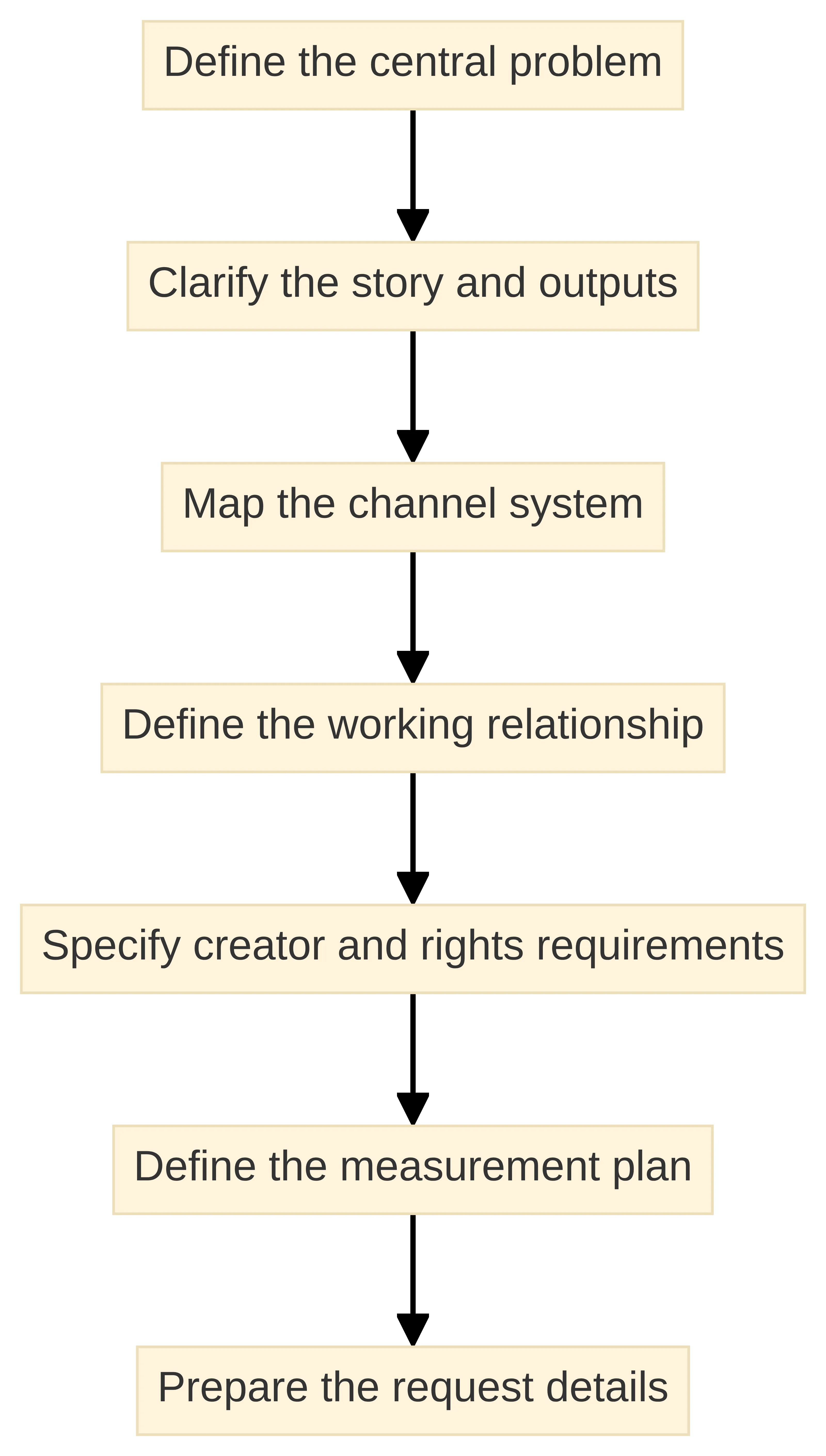
Your decision should begin with a defined scope rather than a general interest in integrated marketing. Before deciding whether to explore Overskies, write down the business question, the audience, the channels involved, and the work your team expects to receive. Then use that brief to make the first conversation specific.
Check these areas:
- The central problem. State whether you need brand strategy, identity development, a product launch, a brand change, campaign creative, content production, social support, retail work, experiential marketing, or a combination. Our stated work spans those areas, but your brief should identify which parts matter now.
- The story and the outputs. Describe the brand story or customer promise that needs clarification, then list the assets and formats required to express it. Ask how the strategic work connects to design, video, photography, editing, animation, social content, or advertising.
- The channel system. Map digital, social, commerce, retail, event, and live-streaming touchpoints. We work with brands that need a unified story across complex channel mixes, so the conversation should make the handoffs between those channels visible.
- The working relationship. Identify your internal owners, approval stages, dependencies, and the support your team needs. We describe our client relationship as a shared alliance and say we help expand internal teams to improve media plans and campaigns. Use your own operating model to define what collaboration should mean in practice.
- Creator and rights requirements. If influencer or user-generated content is involved, specify permissions, creator management, approval, and brand-suitability requirements. Our stated service includes those responsibilities, but your project still needs its own rules.
- The measurement plan. Define the action or business signal you want to observe before production begins. Ask how the proposed work will be connected to that measure rather than treating a past case result as a forecast.
- The request details. Prepare your company information, project type, deliverables, timing, budget, placement, and notes. Clear inputs give the team enough context to understand what you want to explore.
A strong brief lets you assess fit on the work itself: the problem, the scope, the collaboration, and the outputs. It also gives you a practical basis for comparing an integrated partner with an internal-only or specialist approach without turning this article into a provider ranking.
Use the first response to test the working model, not just collect a capabilities list. Ask Overskies to identify which part of the work is strategic, which is production, and which depends on your internal team. Then check whether the proposed sequence matches the business moment: a brand question may need to be resolved before identity or campaign assets are produced, while an established direction may call for focused content, social, retail, or advertising execution. If creators or commerce channels are involved, ask what approvals, rights, and handoffs sit with each party. Finally, ask what would count as a useful first deliverable and what information is needed to reach it.
Keep the answer concrete by asking what Overskies would own, what your team would own, and what approvals or dependencies could affect timing. This is especially useful when a project crosses identity, content, social, retail, or advertising, because the value of integration depends on how those pieces are coordinated. You are not looking for a guarantee. You are checking whether the proposed working relationship gives your team a clear story, usable outputs, and an understandable path from brief to execution.
Send a project brief if the fit looks promising
Our fit is clearest when you need to connect brand strategy and storytelling with the creative work that carries it through content, social, retail, experiential marketing, and advertising. That combination may be relevant when your team manages a complex channel mix or needs additional support with campaigns and media plans. It does not promise a particular outcome for your business.
Bring a defined problem, the channels involved, the deliverables you need, your timing, budget, and the people who will approve the work. A qualified professional on your team should decide whether the scope, budget, and operating model suit your situation. A submitted request begins an exploration of fit; it is not a booked call or delivery confirmation.

 (201) 587-1400
 hello@overskies.com